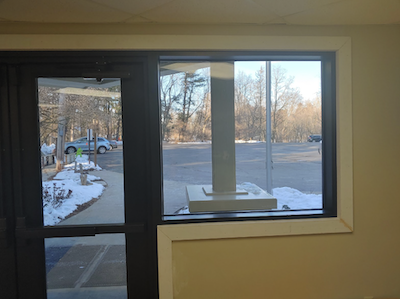
Glass is a design element that enhances natural light, defines open and inviting spaces, and plays a key role in the energy performance and functionality of a building. But glass must also be structurally reliable, able to withstand environmental forces like wind, snow, and the weight of the material itself.
ASTM E1300 is often referenced as a framework to ensure that glass used in buildings performs reliably under structural loads. It's not a ballistic test, but rather a means to determine if the glass can withstand loads such as wind pressure, snow accumulation, and concentrated impacts.
When Total Security Solutions is asked by a customer to meet ASTM E1300 standards, our team designs and tests custom security solutions with these requirements in mind.

What Is ASTM E1300 & How Does It Help Determine Load Resistance?
ASTM E1300 is the Standard Practice for Determining Load Resistance of Glass in Buildings. It gives engineers and designers a method to determine how much load a specific glass configuration can resist before failing. This includes uniform lateral loads from wind, snow, and the weight of the glass itself.
The standard calculates a four-second load resistance, typically expressed in pounds per square foot (psf), and depends on variables such as glass size, area, and aspect ratio.
Why it matters:
- Ensures structural safety: Prevents breakage due to everyday environmental loads.
- Supports code compliance: Referenced by most U.S. building codes.
- Builds trust: Reduces liability and increases confidence in glazing system performance.
ASTM E1300 isn’t just for new construction. It’s also critical when evaluating existing glass systems during renovations or retrofits, especially when adding heavier, protective glass elements.
How ASTM E1300 Works: Key Concepts & Testing Process
At its core, ASTM E1300 provides a set of charts, formulas, and guidance for calculating the load resistance of monolithic, laminated, and insulating glass units. These calculations are based on:
- Glass type and thickness
- Support conditions and span dimensions
- Glass size and aspect ratio
- Load duration (short-term, like wind gusts, or long-term like long-duration snowfall)
- Glass edge conditions (framed, exposed, etc.)
Here's what the testing process looks like:
- Identify the glass configuration (monolithic glass, laminated glass, or IGU glass) and thickness.
- Determine the non-factored load (NFL) using the provided tables.
- Apply glass-type and load-duration factors to calculate the adjusted load resistance.
- Check center-of-glass deflection to verify it doesn’t exceed allowable limits.
From these test results, you’ll know the maximum load that the glass can resist.
How Does This Relate to Ballistic and Security Glazing?
ASTM E1300 and ballistic standards can complement each other in creating glass systems that are both protective and structurally sound. Together, they provide a more complete picture of how glass will perform under threat scenarios, but also in everyday building conditions.
Consider a school district in the Midwest planning a secure vestibule upgrade for a high school campus. The design includes large ballistic glass panels rated to UL 752 Level 3 to protect against handgun threats. But the region also sees significant seasonal snowfall, which can impose long-term static loads on overhead glazing and entry systems. By incorporating ASTM E1300 into the design process, the project team ensures the glass units and support framing are capable of withstanding ballistic impacts and the weight of accumulated snow.
Note: E1300 is often confused with impact standards like ASTM F1233 or forced-entry standards. ASTM E1300, however, is focused strictly on structural load resistance.
TSS Is a Provider That Can Meet the Standards You Need
Total Security Solutions offers systems that can be designed to meet ASTM E1300 load resistance standards where applicable. Backed by exceptional customer service, our team works with you to determine which codes and performance benchmarks best align with your risk profile and design goals.
Contact our experts today to design a custom system that’s secure, structurally sound, and tailored to your environment.
Frequently Asked Questions
Can bullet-resistant glass meet ASTM E1300 standards?
Yes. Many types of bullet-resistant glass can be designed to meet ASTM E1300 standards for load resistance, especially when custom-configured for a specific project.
Is ASTM E1300 required by code?
ASTM E1300 is referenced by many building codes across the U.S., especially for projects that involve large glass spans or glazing in high-wind or snow-prone areas.
How does ASTM E1300 relate to building movement?
Building movement—including structural shifts, thermal expansion, or settling—can affect how glass performs over time. ASTM E1300 assumes proper edge support and deflection limits, which reduce the risk of glass failure due to movement within the building frame.
Does ASTM E1300 account for windborne debris?
No. ASTM E1300 addresses uniform loads like wind pressure or snow weight, but it does not evaluate the impact from flying debris. For that, separate standards such as ASTM E1996 may apply.
Is ASTM E1300 relevant for noise-abatement glass?
ASTM E1300 is focused on structural performance, not acoustic performance. However, note that laminated glazing assemblies used for noise abatement must also be structurally sound.
Does ASTM E1300 account for other factors beyond wind and snow?
Yes. While ASTM E1300 primarily addresses uniform loads like wind pressure, snow weight, and the glass’s own self-load, the standard also considers other factors that can influence performance. These include glass type and thickness, edge conditions, load duration, and how the glass is supported within the frame.
Related Resources

Ballistic Glazing Solutions Guide

The 8 Levels of Bullet Resistant Glass

Guide to Improving Physical Security By Addressing the Human Factor
