ASTM E1996 defines large missile impact testing for glazing under extreme wind and debris events.
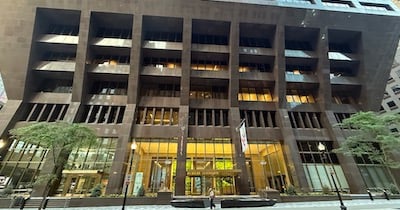
When a threat strikes a facility, glazing systems are often the first components to experience failure. While windows are commonly specified for energy performance and aesthetics, their ability to resist impact and remain intact under extreme conditions is critical to overall building resilience.
ASTM E1996 was originally developed to evaluate how exterior glazing systems perform when impacted by windborne debris during severe wind events, such as hurricanes. Today, the standard is frequently referenced when discussing impact-resistant glazing and protective systems. This includes laminated glass and glass reinforced with security window film—provided those systems are properly designed, anchored, and tested as complete assemblies.
What Is ASTM E1996?
ASTM E1996, published by ASTM International, is a performance specification for exterior windows, curtain walls, doors, and impact protective systems.
The standard establishes minimum performance requirements for systems that are:
- Impacted by missiles representing windborne debris, and
- Subsequently subjected to cyclic pressure differentials that simulate hurricane wind loading.
ASTM E1996 is almost always used in conjunction with ASTM E1886, which defines the test apparatus, procedures, and sequencing used to evaluate compliance.
Together, these standards assess whether a glazing system can:
- Withstand impact without creating an opening that compromises the building envelope, and
- Maintain integrity during pressure cycling after impact.
Large Missile Impact Testing (What It Really Represents)
The “large missile” defined in ASTM E1996 consists of a nominal 9-pound, 2×4 wood member. Missile velocity is not fixed and varies based on wind speed region, building height, and exposure category. Depending on those factors, required impact velocities typically range from approximately 34 to 80 feet per second.
This test is intended to simulate structural debris propelled by extreme wind events, such as framing members or roof components—not hand-thrown objects, tools, or deliberate forced-entry attacks. While the impact energy can be substantial, ASTM E1996 is not a forced-entry or attack-resistance standard.
Passing the large missile test does not mean the glass will remain unbroken. Cracking and fracture are acceptable outcomes, provided the system:
- Prevents missile penetration, and
- Does not allow uncontrolled breach of the building envelope during subsequent pressure cycling.
What ASTM E1996 Does And Does Not Measure
What It Measures
- Resistance to single or limited debris impacts
- Retention of glazing fragments after impact
- Structural integrity under cyclic wind pressure
What It Does Not Measure
- Resistance to repeated tool attacks
- Delay time against forced entry
- Pry resistance or manual breaching techniques
- Ballistic performance
Because of this, ASTM E1996 should not be presented as a substitute for forced-entry, detention, or ballistic standards.
ASTM E1996 and Security Window Film
ASTM E1996 can be relevant when evaluating glazing systems that incorporate security window film, but only under specific conditions.
Key clarifications:
- Security film alone cannot meet ASTM E1996
- The standard applies only to complete assemblies, including glass type and thickness, film, attachment system, and frame and anchorage
- Performance is valid only for the tested configuration and size
In practice, a glazing system with security film may pass ASTM E1996 if the film is properly anchored to the framing system and the entire assembly is tested together in accordance with ASTM E1886.
Claims based solely on film properties or small-scale testing are not technically meaningful.
Related Standards Often Discussed Alongside ASTM E1996
Several other standards are frequently referenced when evaluating glazing performance for safety and security:
- ANSI Z97.1 – Evaluates safety glazing performance using a pendulum impact test; focuses on injury reduction rather than security or impact resistance.
- UL 972 – Assesses burglary resistance using repeated steel-ball impacts; useful as a screening test but not a measure of delay time or forced-entry resistance.
- GSA Blast Standards – Evaluate glazing response to explosive blast loading; applicable only to blast mitigation, not impact or forced entry.
- UL 752 – Defines ballistic resistance levels for glazing and barrier systems; required for bullet-resistant applications.
Each standard addresses a different threat profile and should be selected accordingly.
What Security Window Film Is & Is Not
Security window film is not ballistic-rated and is not tested to UL 752. It cannot replace ballistic glazing or bullet-resistant barrier systems.
What it can do, when properly specified and installed, is:
- Improve glass fragment retention after impact
- Delay entry during limited-impact events
- Reduce secondary hazards from shattered glass
Used correctly, security film can support a layered security strategy, but it must be matched to realistic threat scenarios and installed as part of a tested system.
A Layered, Standards-Based Approach
At Total Security Solutions, glazing protection is designed around threat-appropriate standards.
That can mean:
- Impact-resistant glazing assemblies tested to ASTM E1886/E1996 in high-wind regions
- Ballistic-rated systems tested to UL 752 where firearm threats exist
- Security window film used selectively to enhance impact resistance or glass retention where appropriate
The objective is a code-compliant, technically defensible system that balances risk, performance, and cost—without overstating what any single component can do.

Frequently Asked Questions
Is ASTM E1996 only relevant in hurricane-prone regions?
ASTM E1996 is primarily a windborne-debris standard and is most commonly required in hurricane-prone areas. Outside those regions, it may still be referenced when impact resistance is a concern, but it should not be treated as a general forced-entry test.
Does ASTM E1996 apply to curtain walls?
Yes. The value-impact performance standard explicitly includes windows, curtain walls, doors, and impact protective systems.
Does passing ASTM E1996 mean a window is bullet-resistant?
No. ASTM E1996 does not evaluate ballistic performance. Bullet resistance requires testing to UL 752.
How important is installation with protective systems?
Installation is critical. Even a system that passes ASTM E1996 in a laboratory can fail in the field if anchorage, framing, or installation does not match the tested configuration.
Jump to a Topic:
Related Resources
Our goal is to help you make informed decisions that protect your people, secure your assets, and support your mission—without sacrificing design or functionality. These resources offer guidance for your project.

Ballistic Glazing Solutions Guide

The 8 Levels of Bullet Resistant Glass

Guide to Improving Physical Security By Addressing the Human Factor
