Bird-Friendly Glass
Policy updates in major cities like New York, San Francisco, and Washington, D.C. are driving more architects to specify bird-friendly glass for new construction and renovations, and proposed federal regulations could expand these requirements nationwide.
We've expanded our custom ballistic barrier capabilities to include bird-friendly glass so you can meet local requirements while protecting people. We can add this technology to multiple types of glass panels for use in windows, curtain walls, and storefront systems.
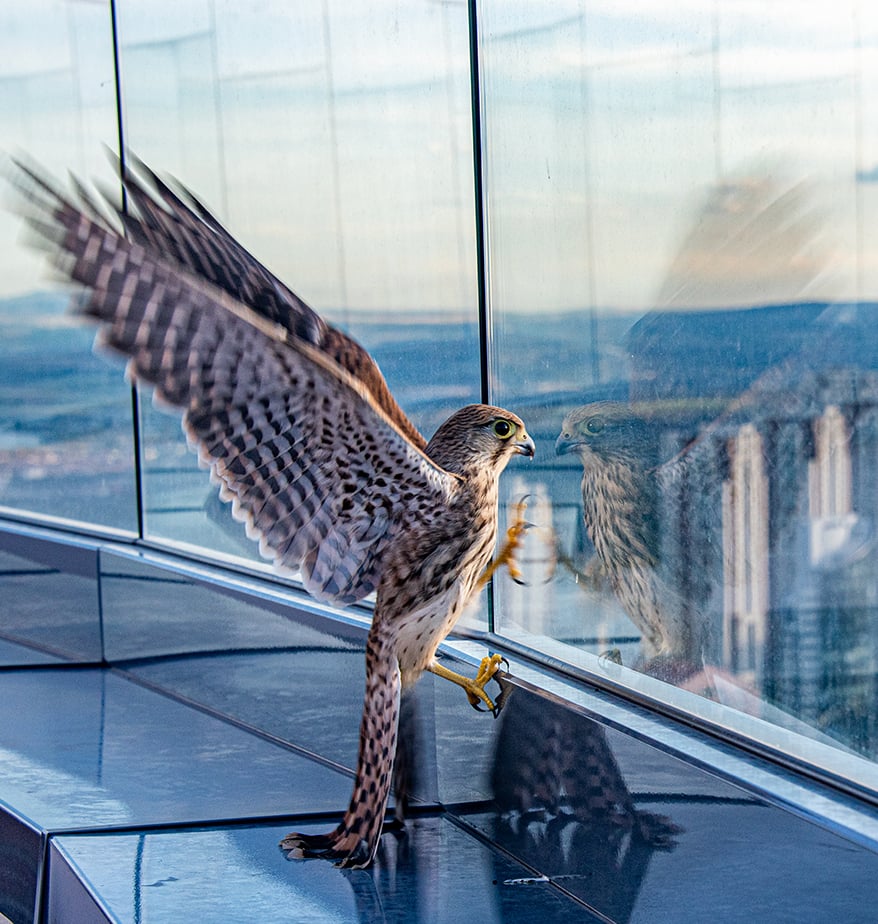
Why Choose Our Bird-Friendly Glass?
When your project requires both bird-friendly glass compliance and bullet resistance, we use a UV coating that resembles a spiderweb pattern.
This coating is:
- Effective for birds, reflecting UV light they can see so they recognize glass as a barrier
- Nearly invisible to humans to maintain aesthetic appeal
- Independently tested to meet American Bird Conservancy criteria for effective bird-friendly glass
- Compatible with energy-efficient low-E coatings, tinted glass, and insulated configurations
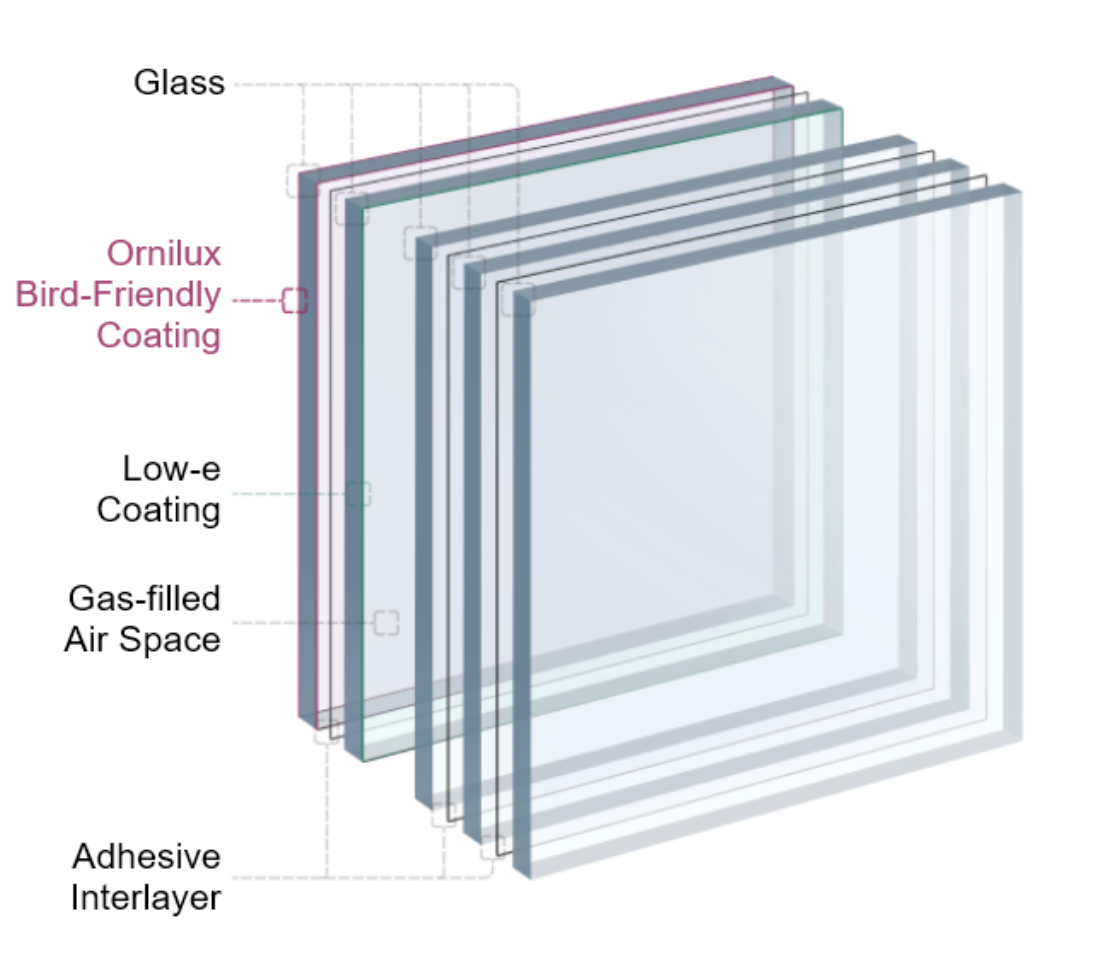
Bird-Friendly Technology
How Much Does Bird Friendly Glass Cost?
Including bird-friendly protection into the makeup of standard ballistic glazing typically adds 15-18% to the cost of a glazing panel. The price you'll pay depends on the scope of the project, including the size of the installation and the number of windows or doors that require protection. Because every facility has unique layouts, compliance needs, and security priorities, our team provides custom quotes to ensure your system balances security, aesthetics, visibility and budget considerations.
How To Specify Bird-Friendly Glass for Your Project
If you're ready to integrate bird collision deterrence into your building's security strategy, here's how we recommend moving forward:
1. Review Local Building Codes. Confirm your city's specific requirements for threat factors, height thresholds, and prescriptive or performance criteria for bird-friendly glass.
2. Assess Security Requirements. Identify where your building needs ballistic protection. Determine appropriate UL 752 levels for high-risk areas.
3. Coordinate With Your Design Team. Share site photos, CAD drawings, and measurements. Note where bird-friendly glass and security requirements overlap.
4. Request a Consultation. Our team will review your project requirements and propose a custom-engineered and bird-friendly glass solution that meets both compliance and physical security standards.
5. Verify Installation Logistics. Discuss installation timeline, on-site access, and any building operations concerns.
Ballistic Glazing Solutions Guide
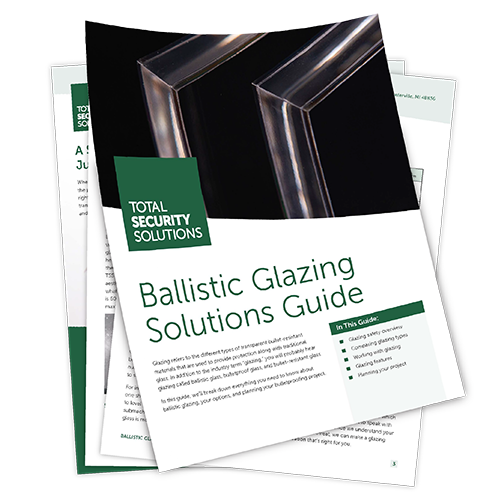
If you’re not familiar with bullet-resistant products, determining your level of threat can be tricky. Our Ballistic Glazing Solutions Guide outlines everything you need to know about bulletproof glazing.
TSS Is Your Trusted Partner for Physical Security
When you need to keep your business and your people safe, TSS is proud to help. We are passionate about equipping teams with the security they need. To learn more, request a free consultation with one of our ballistic experts. We’ll meet with you in a no-strings-attached conversation to learn about your budget, threat level, and goals. We’ll also provide recommendations about how to achieve those goals. We look forward to speaking with you!