%20(1).jpg)
With more high-profile attacks targeting executives, corporate security directors are focusing on hardening the offices where leadership spends the majority of their time.
All-glass office doors offer invisible protection without compromising style or accessibility.
Here’s a closer look at why these doors are in high demand today and what to consider if you’re looking at options.
Why Are Security Directors Focusing on Bulletproof Office Doors?
Most physical security planning starts at the perimeter, including the guard booth, main entrance, and the lobby.
However, when we design executive protection solutions, we have to account for the fact that in many corporate buildings, the main entrance is in a shared building that needs to be accessible to many employees coming and going. Using ID badges, visitor management systems, and metal detectors can help to screen people as they enter, but they won’t stop someone who runs in through an open door.
It would not have stopped the man who killed four people, including a security officer and off-duty police officer, after entering through the main doors and then attempting to reach the NFL headquarters.
The door between the elevator lobby and the executive suite is the first barrier between an intruder who has made it past reception and the people they intend to reach. It needs to be designed to slow them down and stop bullets, preventing them from shooting their way through.
At the same time, it needs to look inviting to everyone else who is entering to do business with the people on that floor.
How Do We Design All-Glass Ballistic Doors?
Corporate interiors at the executive level shouldn’t look like they’re under threat. They need to convey openness and confidence. Solid steel doors, heavy hollow metal frames, and opaque panels communicate the wrong message and don’t fit the aesthetics architects and interior designers have already envisioned or created.
This is the problem we set out to solve when we first developed our all-glass bullet-resistant office door.
I'll be honest: it was not a simple engineering problem.
It took us 18 months and roughly a dozen prototype installs to work out the details, including tolerances, edge polishing, and sizing for holes where the handles could be installed.
We needed it to look like a single pane of standard glass while being significantly heavier and designed with several layers.
We chose glass-clad polycarbonate (GCP).
(GCP) 1250, which is made of two outer layers of quarter-inch tempered glass and two inner layers of 3/8 inch polycarbonate, the same material used in police shields.
It’s designated as low-spall, so it minimizes fragmentation, creating a safer environment.
We had to collaborate closely with our glass manufacturer to cut, drill, and polish the material prior to shipping because glass-clad polycarbonate (GCP) is less forgiving than acrylic and demands precision at every step of fabrication.
The result was worth it. We now produce all-glass bullet-resistant doors that most people can’t distinguish from standard commercial glass doors.
We can make doors that can be tested up to UL 752 Level 3, meaning they are capable of withstanding three shots from standard handguns.
Instead of a traditional framing system, these doors are held in place with a full height channel (FHC) rail at the top and bottom edges.
What Should You Consider When Specifying All-Glass Doors?
While these doors look simple, they are heavier than standard commercial glass and require careful attention to detail when planning and installing office doors with glass.
Here are a few things to keep in mind.
How High Is the Opening For Your Doors?
Glass comes in standard sizes and is more difficult to work with beyond those limitations. For this reason, we typically do not install all-glass doors for openings higher than 9 feet.
Width is less of an issue. We can create an entire storefront with all-glass doors and rails.
What Hardware Do You Need For All-Glass Doors?
Because ballistic glass is heavier than standard glass, the hardware you choose needs to be stronger than what you’d use for commercial doors.
We typically recommend back-to-back pulls with a magnetic lock. We can also install doors with panic handles or panic locks as long as we account for these details ahead of time.
A panic handle is either bolted to the door through pre-drilled holes or is mounted through a fitting along the edge of the glass. It’s designed to lock from within, not inside the door. They may also use a lever or latch to release the door in case of an emergency.
Panic locks make it easy for someone to secure the door from the inside using an access control system.
What Design Considerations Do You Have?
All-glass ballistic doors can be frosted for privacy, mirrored, or tinted to match your office design. We can add decals or designs to it as well.
What Is The Lead Time For Ballistic Glass Doors?
Because these doors are custom designed and fabricated to meet specific security requirements, the lead times are longer than they are for standard commercial doors.
Involving our team early in the planning process can help you specify all the details ahead of time, including hardware and installation, to avoid unexpected delays.
We can also complete installations during weekends or holidays to fit your timeline and minimize downtime.
Where All-Glass Bullet-Resistant Doors Fit in an Executive Protection System
It’s important to remember that doors are one part of executive protection, not a single solution.
In addition to doors, we frequently recommend increasing physical security by adding other elements, including:
Bulletproof Windows
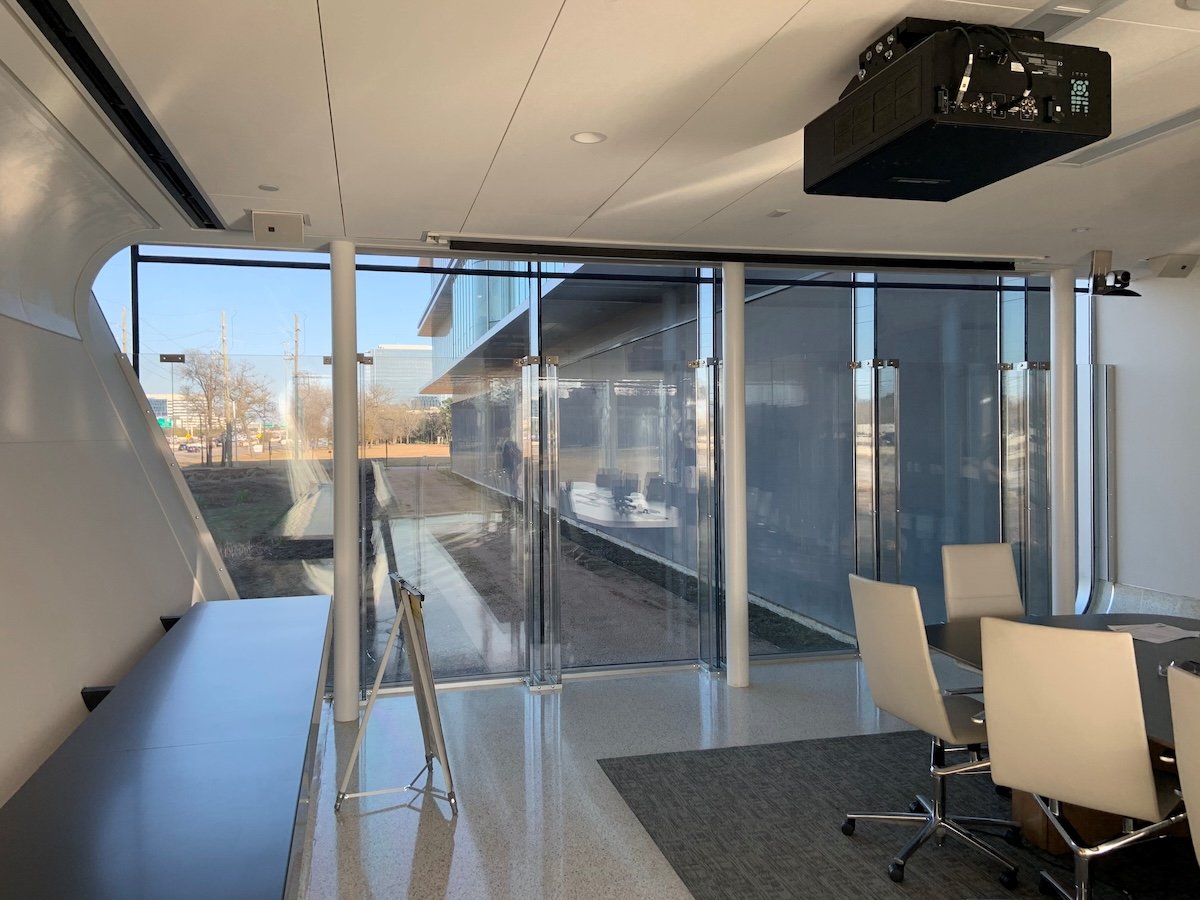
Exterior-facing windows on lower level executive floors are often a high priority to protect people from threats outside the building. We can design and install windows tested to up to UL 752 Level 8, depending on your threat profile.
Because of the weight of the glazing, ballistic windows need framing tested to the same level. Ballistic frames can channel heat or cold into your building, so thermally broken frames are worth considering if you routinely face extreme temperatures and want to make your office more energy efficient.
For windows you can’t easily replace, backglazing is another way to add an additional layer of security while maintaining building design and keeping your project cost-effective.
Secure Reception Areas
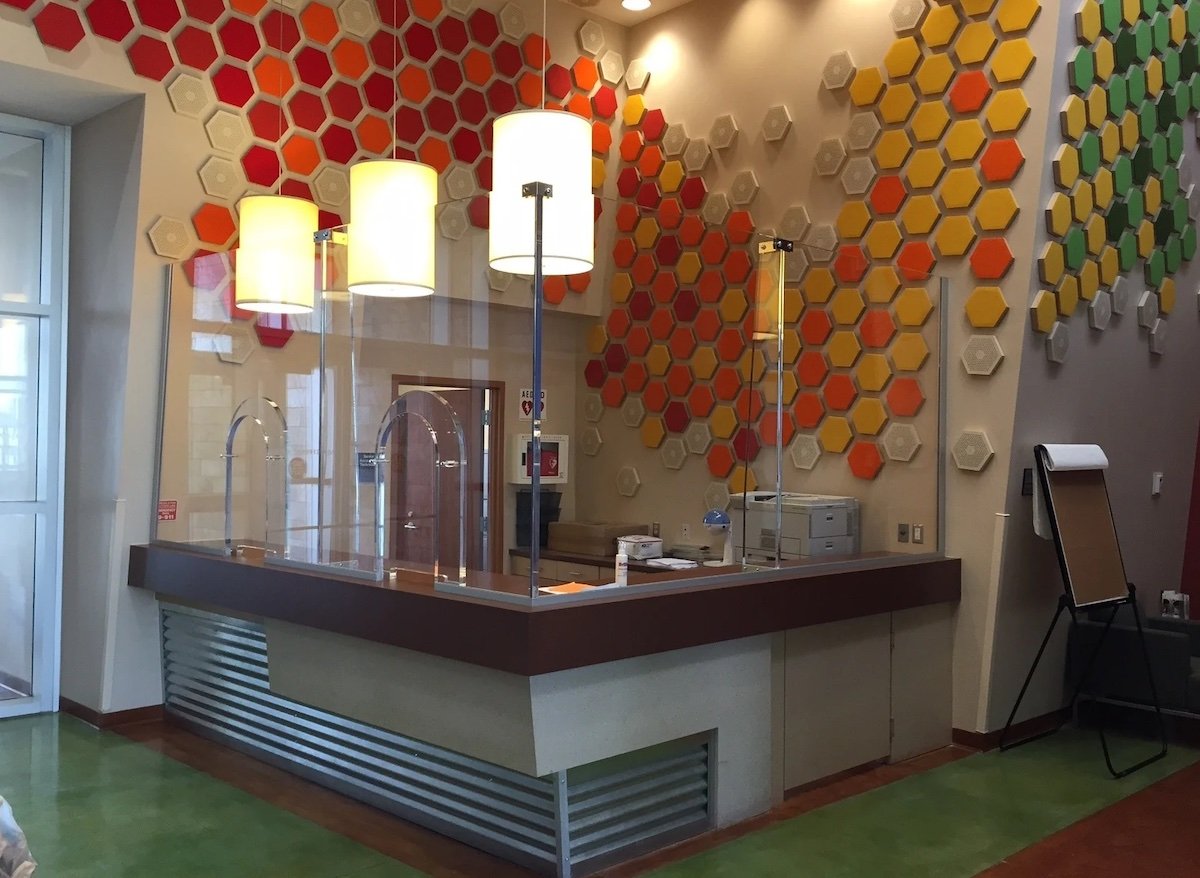
If you’re concerned about controlling access to your workplace or executive floor, a secure reception area is one way to add protection. This is a custom solution that involves adding ballistic glazing to an area where visitors check in. It’s designed to slow people down while protecting those who greet them.
Safe Rooms
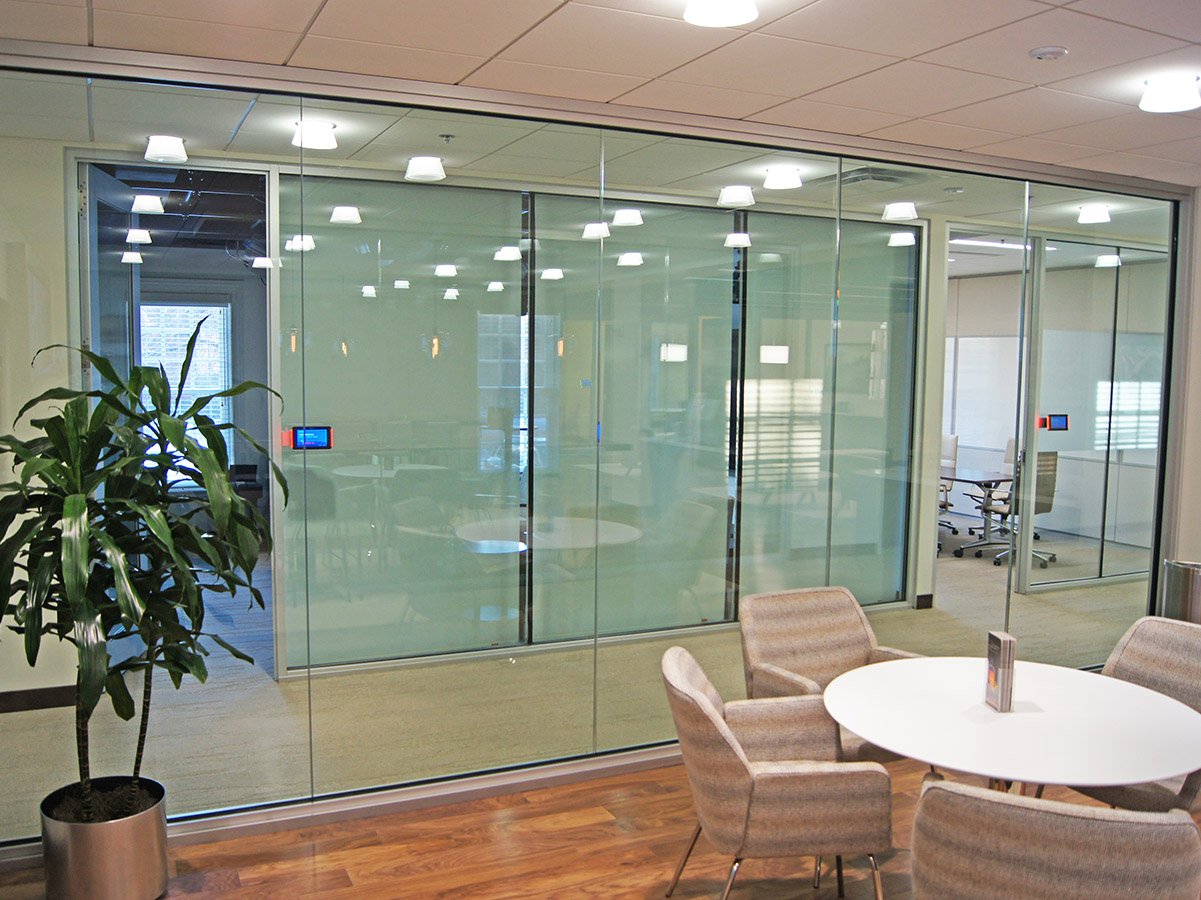
Any conference room that is already enclosed can become a safe room for employees to take shelter during a violent incident. Converting an ordinary room into a safe room typically involves adding a ballistic door, strengthening walls with ballistic fiberglass panels, and adding ballistic glass to any existing windows.
Explore our full executive protection solutions to learn more about your options and see what we’ve done for other offices.
Building Security That Starts From the Inside Out
The security directors who are most effectively protecting their leadership teams start with a comprehensive risk assessment that identifies where key personnel spend time and where the greatest vulnerabilities exist.
Then they work with ballistic experts to design barrier systems that address each one.
We've designed, fabricated, and installed custom ballistic systems in more than 30,000 buildings across the country.
Executive protection is one of the fastest-growing solutions we’re providing, and ballistic office doors are a key part of that.
If you’re looking for ways to provide effective protection for your people with minimal disruption, schedule a consultation with our team.
We'll review your building layout and help you develop a plan that fits your aesthetic and your operations.