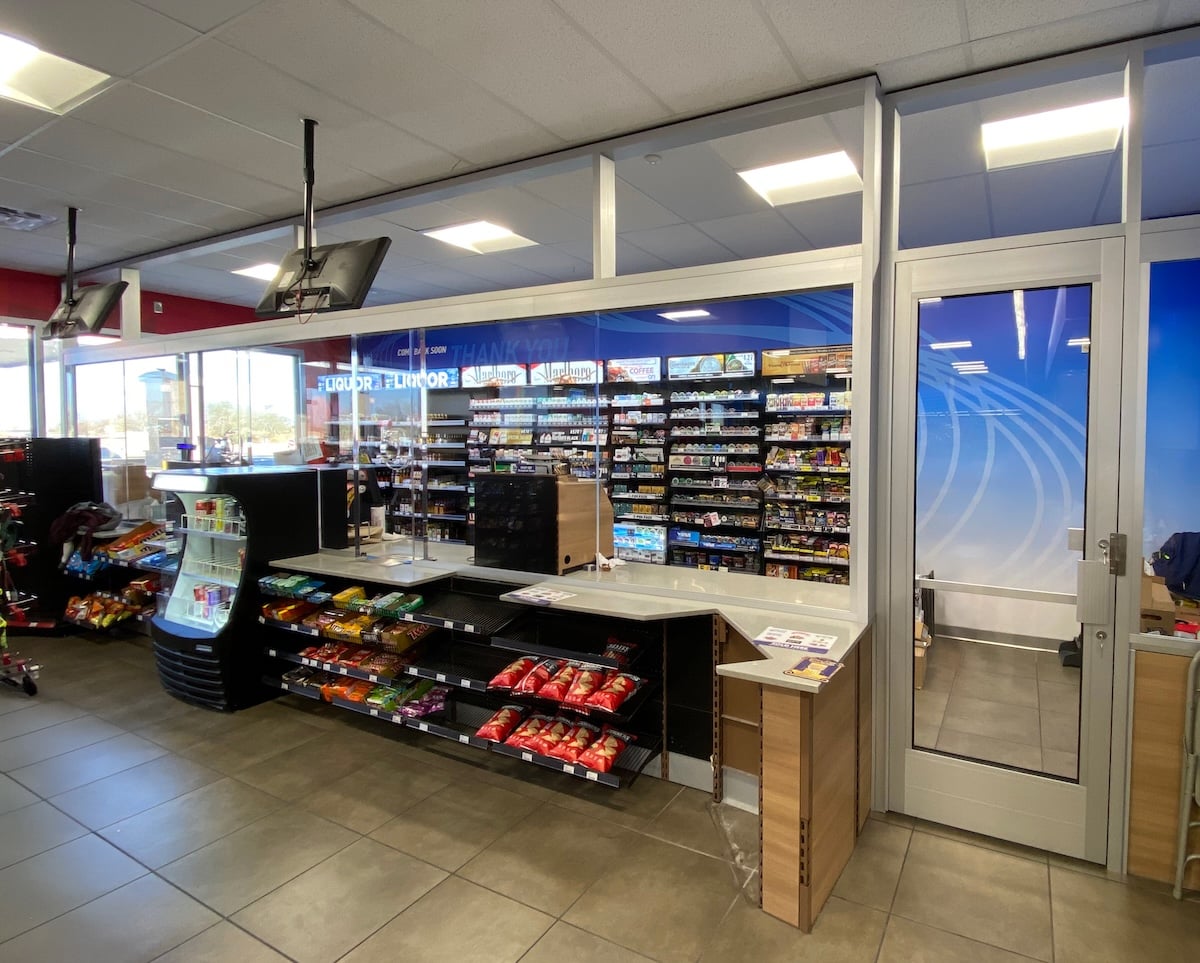
‘Ballistic window film’ has become concerningly common, presented as an affordable path to protection and even making its way into published standards and enacted law.
However, claims about ‘bulletproof film’ are full of holes.
Film alone cannot stop bullets. The International Window Film Association has repeatedly issued statements reiterating this.
Nonetheless, we’ve seen security window film sellers claiming their products are equivalent alternatives to ballistic glass as they try to market them as a lower-cost solution to organizations with tight budgets.
Below, we’ll briefly review what security film is and go over five important questions you should ask when considering the role window film can play in your physical security plan.
What is security window film?
Security window film is a thick polyester plastic that can be applied to existing glass. It holds broken glass together after impact, slows intruder entry, and prevents injury from glass shards.
It’s available in a range of thicknesses, and lab-tested to a variety of recognized standards to verify that security film’s durability and performance under a variety of conditions, including extreme weather, vandalism, burglary attempts, and even explosive blasts.
Untreated glass can be breached within seconds.
Properly installed and anchored security film can delay entry by minutes, giving law enforcement and first responders time to arrive on the scene, affording building occupants an opportunity to take action.
Security window films are an effective solution in many applications and have their place in a comprehensive bullet resistant barrier system. But no product on the market today can be applied to existing windows and reliably stop bullets on its own.
Our engineering team at Total Security Solutions, with the support of security film manufacturers, has investigated what security film can achieve in terms of ballistic protection.
Even when we applied multiple layers of the thickest security window films, tested windows failed to reliably perform in test conditions.If you take a standard commercial tempered glass window and apply enough layers of security film to it, it’s possible to create something that will often stop a single small-caliber bullet.
But this is unreliable under real-world conditions, and stopping one bullet falls short of even the lowest standards for ballistic glass, which must be able to stop at least three 9mm bullets in a four- to five-inch grouping.
(This video shows the difference between how ballistic glass and security window film perform against the same threats, and as you can see, they are not equal.)
Not all products marketed as ‘bullet-resistant film’ are tested or certified the same way. Before you rely on any product to protect people and property, ask these five questions.
A reputable manufacturer should be able to answer each one clearly and provide documentation to support it.
1. Is This Product Independently Certified To Stop Bullets?
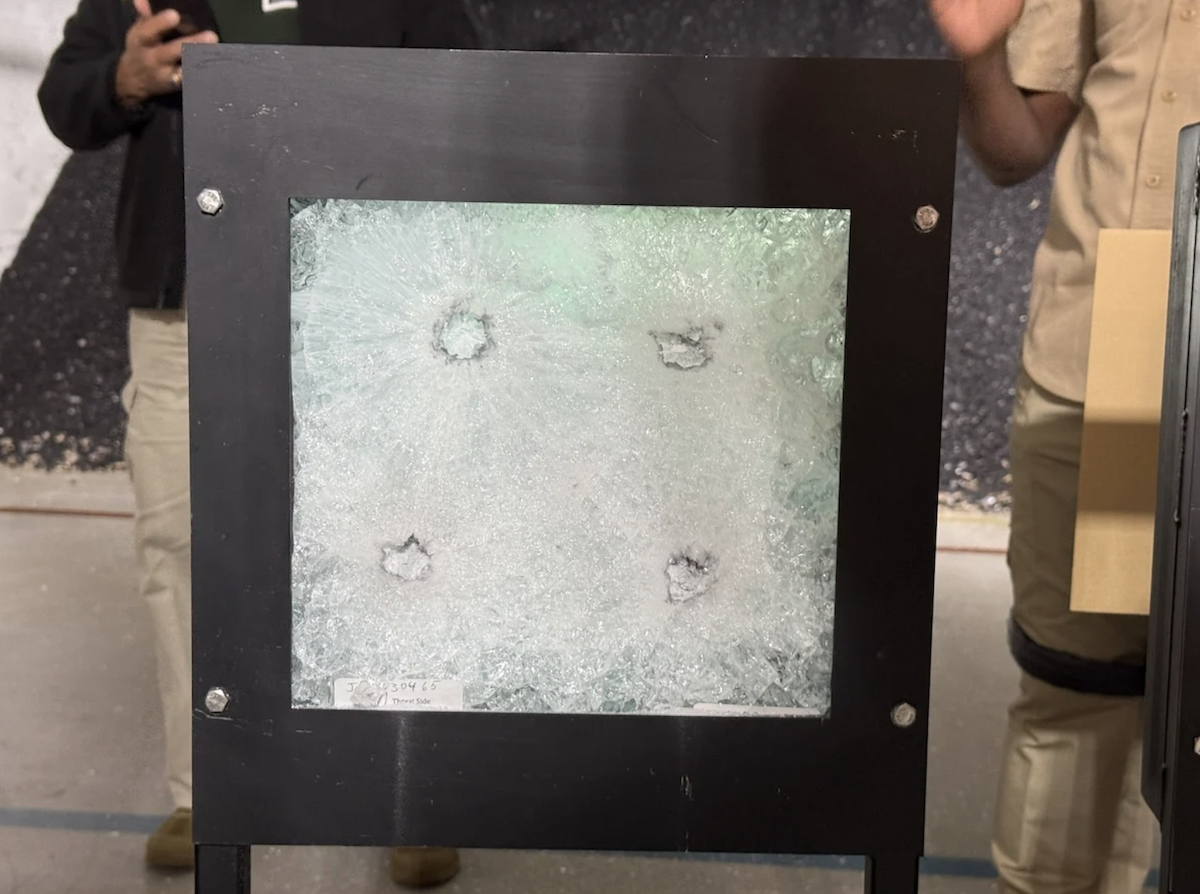
Saying something is ‘bulletproof’ or ‘ballistically rated’ is vague to the point of being meaningless. In bullet-resistant building construction, the gold standard is UL 752, the Standard for Bullet-Resisting Equipment.
UL 752 covers individual materials such as fiberglass panels or pieces of bulletproof glass and also applies to systems made of multiple materials, such as bullet-resistant doors or transaction windows.
According to UL 752, “bullet-resisting” means that the material prevents:
- Complete penetration by a bullet or bullet fragment
- Barrier fragmentation that could injure a person “standing directly behind the bullet-resisting barrier”
UL 752 defines 10 levels tied to specific firearms, ammunition, velocity, and number of shots sustained.
Levels 1 through 3 are designed to stop three-shot clusters from various common handguns, while Levels 4 through 8 are designed to stop one to five shot bursts from various rifles and submachine guns.
Levels 9 and 10 apply to high-powered sniper rifles, and are primarily used in military or government applications.
Self-testing, manufacturer demos, and live-fire videos are not equivalent to certified lab results.
Ask the provider: Has this exact product been certified by an independent testing organization, and can you provide the certification?
A trustworthy answer: They should be able to show you the standard the material was tested to and what level of protection it achieved. They should also be able to tell you the type of ammunition used during testing, how many shots were fired, and whether those rounds were fully stopped.
Be cautious if they say: “We tested it ourselves,” or, “It performed well in demonstrations.”
If a provider can’t give you the test report, ask why.
2. Is It the Film That Stops the Bullet, Or the Entire Window System?
Security film doesn’t perform in isolation; it’s part of a system that includes your existing windows and how the film is anchored to them.
Architects account for this when specifying ballistic glass for windows, doors, and other barrier systems. They account for glass thickness and use framing tested to the same standards to support it.
A film that performs adequately when anchored to ⅜-inch annealed glass under controlled test conditions won’t necessarily perform the same way when applied to the quarter-inch tempered glass common in most buildings, or to one-inch insulated glass window units in standard frames.
Ask: Is the film itself bullet resistant, or does it only perform that way when combined with specific glass and framing?
A trustworthy answer: “The protection comes from a complete, tested window system. The film is one component of that system.”
Be cautious if the provider implies the film alone provides protection without explaining the full system required.
3. Will It Provide the Same Protection on My Existing Windows?
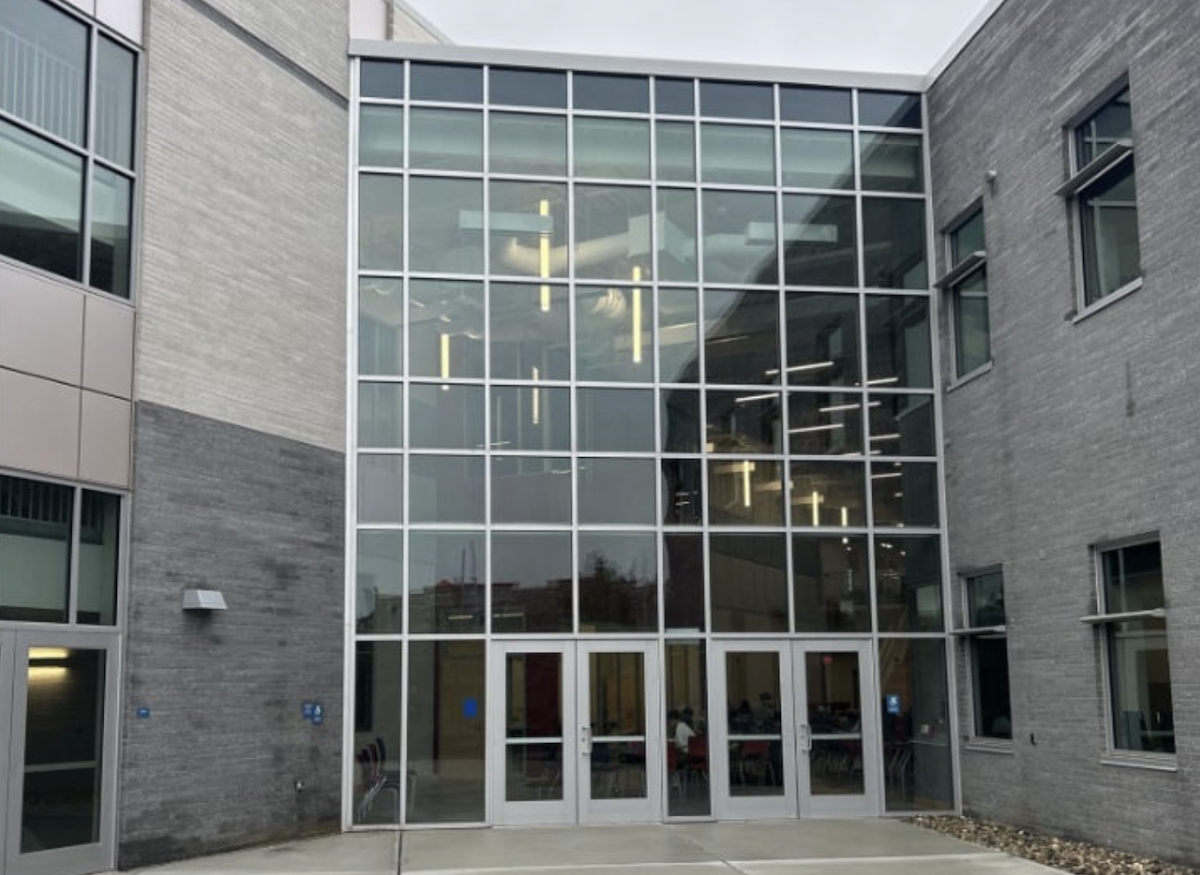
Security window film must be both properly mounted to the glass and anchored to the window frame to ensure glazing stays in place after impact. Without adequate anchoring, even intact glass can pop entirely out of its frame, leaving an opening an intruder can step right through.
There are several anchoring approaches, and they’re not interchangeable.
The right anchoring system depends on both the security film and the specific frame it’s being applied to.
Ask: If this film is installed on my current glass, will it perform exactly the same as it did during testing?
A trustworthy answer:“Performance depends on the type of existing glass, framing, and installation. We can specify exactly which configurations are tested and approved.”
Be cautious if they say “It works on any window.”
4. What Exactly Was Tested?
This is the question most buyers forget to ask. A test report means very little without a clear, reproducible description of the assembly that was tested.
Ask: Can you provide the full system makeup that was tested, including glass type, thickness, film thickness, and the framing system?
A trustworthy answer:"The tested system consisted of [glass type and thickness], with [film], installed in a [steel or aluminum] framing system with defined anchoring."
- They can provide a full system cut sheet or configuration sheet.
- Documentation matches the test report.
- They can confirm the installed system matches what was tested.
Be cautious if they say:
- "It was tested as part of a proprietary system, but we can’t share the configuration.”
- “The details are confidential.”
- “Here’s the test report,” but there’s no system clearly described.
5. Was the Entire Window Tested, Or Just Part of It?
ASTM F3561 is the Standard Test Method for Forced-Entry Resistance of Fenestration Systems After Simulated Active Shooter Attack.
Barriers designed to pass this standard sometimes incorporate security films to keep people out after the glass is shattered. But a film used in a system that passes ASTM F3561 is not the same as a film that independently meets ASTM F3561.
By definition, ASTM F3561 testing assesses a complete system, including glazing, framing, hardware, and anchoring together.
A film alone cannot claim this standard.
ASTM F3561 is also not a ballistic test. It assumes bullets have already penetrated the barrier and measures whether the system can delay forced entry afterward. Anyone who uses ASTM F3561 to imply that a material will stop bullets misrepresents the standard.
If a provider lists ASTM F3561 on a spec sheet, ask what they mean, what the completed tested assembly included, and what independent lab tested it.
Ask: Did testing include the full window system, including the glass and frame?
A trustworthy answer: “The complete system was tested together under controlled conditions.”
Be cautious if the explanation focuses only on the film or glass without addressing framing and installation.
Choose the Right Protection For Your Facility
Budget pressures are real, especially in schools and houses of worship.
The right answer is matching protection level to the actual threat zone, not applying one product uniformly across a building. Window film providers who cite standards without level designations, withhold test documentation, or can’t tell you what lab tested their materials are giving you red flags.
Security window film has a role alongside bulletproof glass, but the right application matters.
Choosing the right security product for your facility starts by understanding what each product can and cannot do, then matching that to what you need to protect.
A good guideline is to use glass tested to ballistic standards in areas where people are typically nearby, such as main entrances or transaction windows with employees working them.
You may also want to use glass tested to standards for forced entry for environments where there’s a high risk of an active shooter breaching the glass, such as at a school or workplace.
Security window film is a better fit for areas where you want to protect assets, such as preventing a break-in at a store after hours, or where you want to delay forced entry but don’t need ballistic protection.
A side door or window where people typically aren’t present but where someone could force their way inside is one example.
Our team starts each project by asking questions like these. We’ll tell you honestly when film is the right call and when it isn’t.
If you’re considering upgrading security for your building, start by downloading our free ballistic glazing solutions guide or request a free consultation to start planning today.