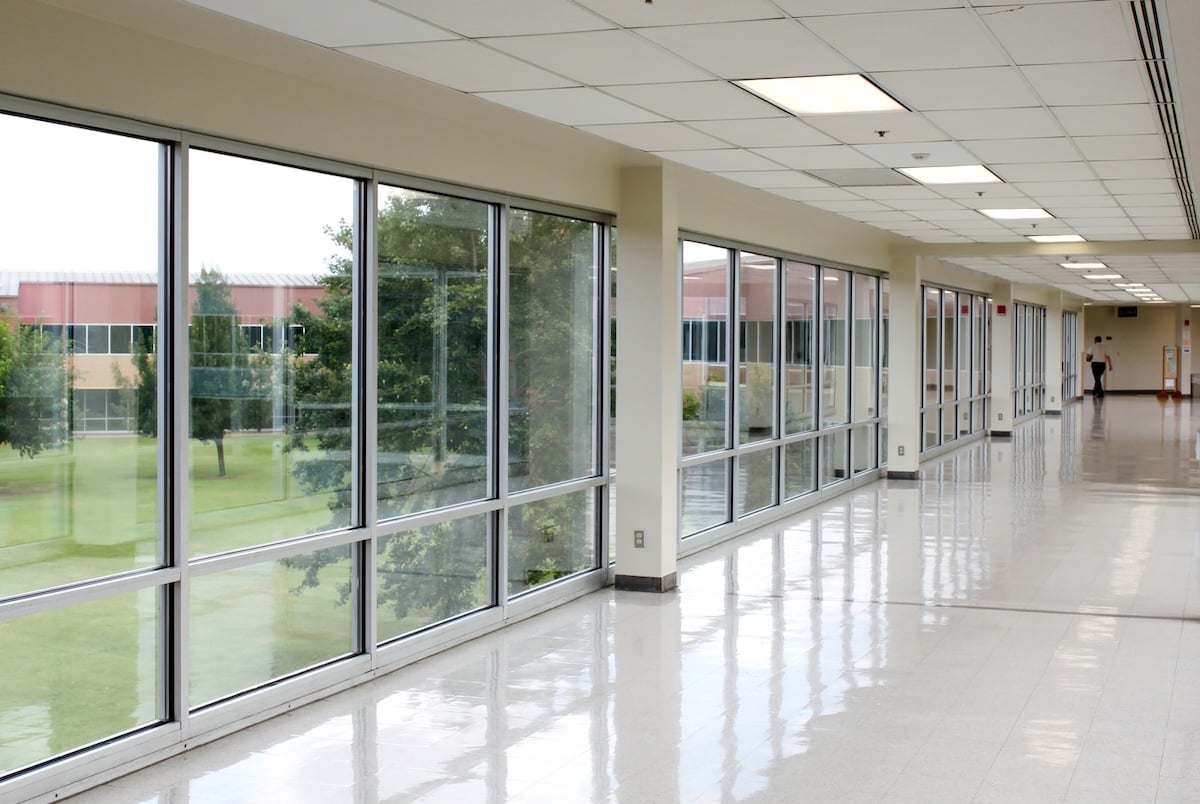
Ballistic windows can be extremely energy efficient, but only if you focus on more than the glass.
To ensure bullet-resistant exterior windows are also helping minimize your HVAC costs, ballistically rated insulated glass should be matched with ballistically rated thermally broken framing.
For decades, that was easier said than done.
Bullet-resistant components were initially developed only to enhance security. A window or door that is great at stopping 100 bullets from a dozen different guns might not be very good at keeping out a cold winter draft or scorching summer heat. This left builders, architects, and facility operators having to accept compromises between security and energy efficiency.
When most of your bulletproofing is inside a temperature-controlled building, that’s a mild inconvenience. But as more people seek to harden building exteriors, minor inconvenience can become a major expense.
Today, you have a much wider range of options to meet security goals without sacrificing efficiency or driving up operating costs.
Here’s why ballistic security has historically been at odds with energy efficiency, the factors that have driven advancements in bullet-resistant building materials, and the types of incentive programs available to help you increase security and energy efficiency without straining your budget.
The truth about windows and insulation
Glass is not a good insulator. That’s why almost every exterior building window you see is an insulated glass unit, or IGU. These are constructed of two or more panes of glass, each separated by an insulating air gap. It’s like a Yeti mug made of glass. An IGU insulates about two to four times better than a single pane of glass.
Ballistic windows rely on solid slabs of tempered glass, acrylic, and polycarbonate. Thermoplastics like acrylic and polycarbonate outperform glass a bit in terms of heat retention, but they aren’t remotely as effective as standard insulated glass units. As a result, that solid slab of bullet-resistant glass transfers heat well, allowing cold winter nights to steal your heat and hot summer days to turn your lobby into an oven.
Window frames are a similar story. Aluminum and steel are terrible insulators. To keep them from conducting heat through your walls, modern non-ballistic exterior metal frames almost always have a “thermal break” hidden inside.
The inner and outer frame are separated by an insulating spacer that prevents heat from flowing around your nice insulated glass window.
To stop bullets, most bullet-resistant frames are made of thick pieces of aluminum or steel. They’ll stop a bullet, but they won’t stop heat from flowing through or interior condensation and frost from building up. This can lead to problems with mold or mildew and indoor air quality.
Why did we develop insulated ballistic windows and frames?
About 10 years ago, I began to suspect that the poor energy efficiency of traditional ballistic windows was going to become a big issue. 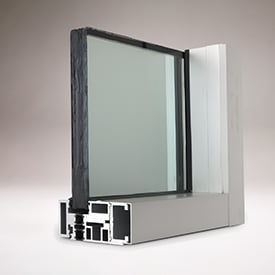 Hardening the building envelope was increasingly a priority, which meant installing more exterior ballistic glass, bullet-resistant framing, and bulletproof doors in a wider range of buildings.
When you do that work, you quickly discover that the right entryway system for a school in Florida isn’t the same one you want for a sheriff’s office in North Dakota or a courthouse in Arizona. At the same time, we began hearing from clients and architects pursuing LEED certification for their projects and trying to find ways to lower building operating costs over the long term.
That’s when we first began experimenting with thermally improved window framing and ballistically rated IGUs. Since then, all the trends that led us to explore thermal framing and ballistic IGUs in the 2010s have become even bigger issues:
- Energy is more expensive than ever, making building efficiency even more important
- LEED certification has continued to gain momentum, with more than 7,500 LEED-certified commercial projects moving forward annually, mostly in the United States
- Building codes and government incentive programs have increasingly emphasized energy efficiency
- Architects are adding more layers of ballistic security, especially to the building envelope
Our current generation of insulated framing and ballistic IGUs eliminate the old security and energy efficiency trade-offs. They perform as well as (or better than) their non-ballistic counterparts, meeting the most stringent building code specifications. And they do so while meeting lab-certified UL standards for stopping bullets.
How have evolving building codes encouraged advancements in bullet-proof construction?
Local building codes keep setting higher expectations for energy efficiency and building envelope performance. Most local codes are based on the International Energy Conservation Code (IECC) published by the International Code Council (ICC). Every three years, the ICC publishes a new version of the IECC, setting higher standards for new construction and remodels.
IECC considers windows as an entire assembled unit (including glass, spacers, and frames), and sets a maximum U-Factor for that unit.
“U-Factor” is a basic measurement of how well a material allows heat to flow through, with a lower number signifying better insulation. U-Factor is calculated for a window unit based on the surface area and shape of the frame and windows.
As a practical matter, any metal frame needs to be “thermally broken” to stay below the mandated U-Factor.
According to the U.S. Department of Energy and the National Conference of State Legislatures, ICC’s IECC is the nation’s most common baseline building code when it comes to energy efficiency. Most communities adopt the current IECC into law as their legally binding building energy standard, sometimes with carve outs, but often with further enhancements. As the IECC becomes more strict, building codes across America tend to follow suit.
What are examples of state building codes for energy efficiency?
Many states have their own building codes specifying energy efficiency standards, and these continue to evolve. Here are a few:
- Washington state law requires the building code to show a substantial reduction in energy use with every cycle. Its commercial code requires a posted thermal envelope certificate documenting U-factors, solar heat gain coefficients, and building air leakage test results similar to IECC.
- Oregon has fully phased in their 2025 Energy Efficiency Specialty Code, which is based on ASHRAE Standard 90.1-2022 but amended such that, when it comes to the building envelope, it is the same as IECC.
- New York has the 2025 Energy Conservation Code similar to IECC, requiring third-party building envelope certificates documenting U-factors, solar heat gain coefficients, and the results of thermal envelope air leakage testing.
- Illinois has a commercial stretch energy code requiring a permanent building thermal envelope certificate on every project, in addition to raising their state code’s baseline in 2025.
- Massachusetts requires architects to calculate and document thermal bridging through metal frames, fenestration (the design and arrangement of windows), and U-factors on larger buildings.
- Larger new and majorly renovated federal buildings must meet ASHRAE Standard 90.1 as a baseline. That includes courthouses, veteran and military hospitals, and offices or housing taller than three stories. Low-rise housing must meet IECC standards. In both cases, the baseline is modified by the Energy Conservation and Production Act, which requires that projects also cut building energy consumption at least 30% below that baseline (where it’s cost-effective to do so).
What incentives are available for energy-efficient commercial buildings?
At one time, there was more funding available to support energy efficiency upgrades.
Today, several of the federal programs have closed or paused, including tax deductions available via Section 179D of the Internal Revenue Code, which closed to new projects on June 30, 2026.
The USDA Rural Energy for America (REAP) program that previously provided load and grant funding to rural businesses for energy efficiency improvements was placed under revision as of November.
The Department of Energy’s Renew America’s Schools program recently announced it will establish a network of regional hubs to help school districts plan and finance facility improvements. Organizations that want to be part of a hub to access these resources can apply through Jan. 15, 2027, and local education agencies will be selected next fall.
There are other incentives available for energy efficient upgrades if you know where to look. State governments and local utilities offer many programs that can help schools, hospitals, government agencies, and other public and commercial building owners improve security and energy efficiency at the same time. Some of these programs offer grants or direct rebates based on the size and scope of your renovation project.
For instance, Rocky Mountain Power Utah offers a rebate of $1.00/sq ft of window retrofit when upgrading a building envelope for energy efficiency. More often, these programs are set up as “custom incentive” programs, like Massachusetts’ Mass Save Path 3 program, which pays a fixed amount per kWh or therm saved by the upgrade.
Most states have these kinds of programs: You can find them using portals like North Carolina State University’s Database of State Incentives for Renewables & Efficiency®, U.S. EPA’s Energy Star Rebate Finder, or by contacting your local utility. Keep in mind that these incentive rates and deadlines can change every year, and nearly all require pre-approval before you order materials. Make sure to do your homework, reach out to the agency or utility directly, and confirm current program terms and conditions before specifying your ballistic materials.
How can we help you upgrade your building to meet energy and security goals?
Building codes and requirements can be daunting.
Our goal is to help you meet energy and security specs in the same project, with thermally broken bullet-resistant framing and insulated ballistic glass that meets your security, structural, and aesthetic needs. In addition to helping you choose the right window makeup and frame and design the right solution, our team can help you navigate any available incentives with needed documentation and calculations for U-factor, solar heat-gain ratings, and air leakage.
Contact our ballistic security experts if you have questions or want to get started with a specific project. Our team looks forward to speaking with you.